
Change Not Guaranteed
A trade of one kind of value for another. Offer real, tangible change, and a Non-Fungible Change token comes into existence. What either of them is worth, and what any of it means, is the part you take home.
Change Not Guaranteed stood on the floor at Gray Area in San Francisco in March 2022, as part of the Creative Coding Showcase. It was a momentary tether between the physical world and the digital one, built to tempt the audience into stepping across from watching the strange new world of NFTs to being implicated in it. You put money in. Something else came out.

The trade
Say you have a dollar in your pocket.
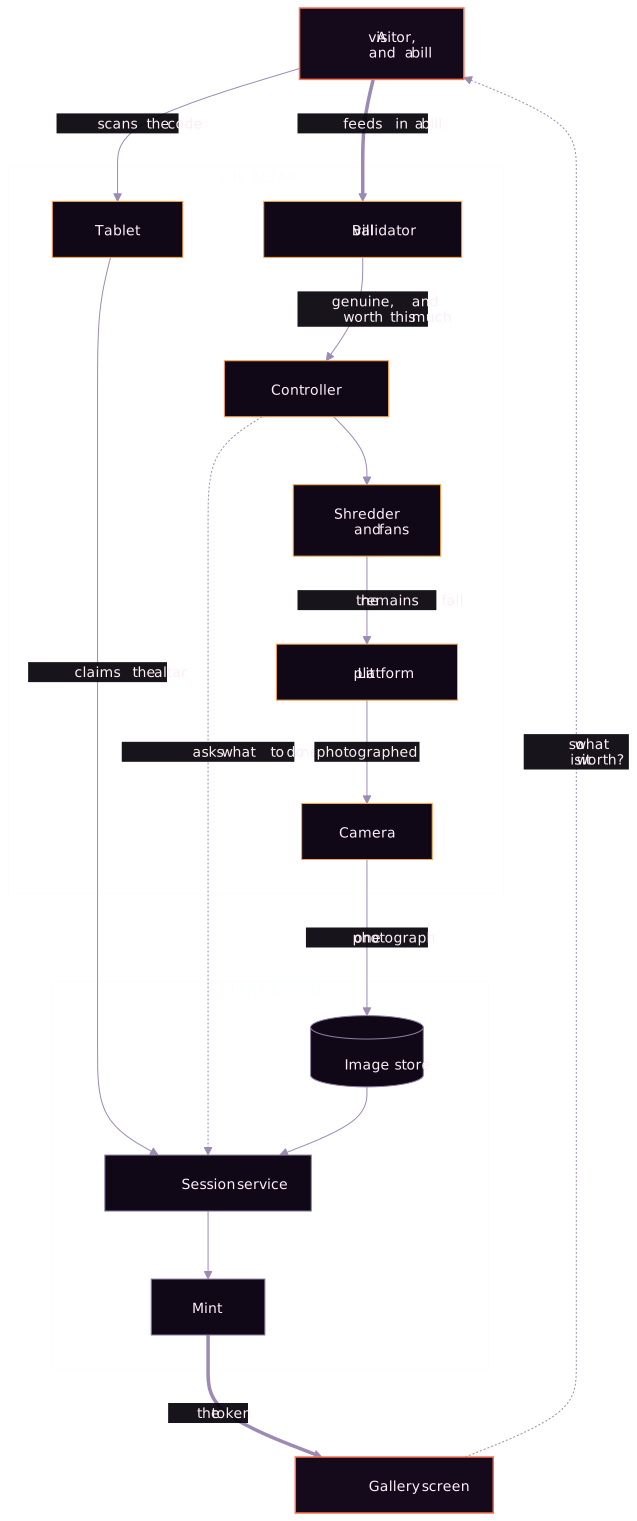
The first thing you would do is scan the code on the tablet mounted to the front of the pyramid, which claims the altar. For the next few minutes it is yours, and it starts calling you by name. Then it points upward, at the slot, and tells you it is time to make the sacrifice for change.

Behind that slot is a bill validator, the same class of machine that takes your money at a laundromat or a parking garage. Its entire character is suspicion. It reads the paper, the ink, the size and the threads, because its one job in life is to work out whether it is being lied to. It will not take a photocopy and it will not take a napkin. It only accepts the real thing, and it reports back exactly what the real thing was worth: one dollar, five, twenty.
Having satisfied itself that your money is genuine money, it keeps it, and the motor starts.
Nothing comes back. There is no cancel on the tablet, no coin return on the pyramid, and nobody to appeal to. The only decision in the entire piece is the one you already made, and the machine's single non-negotiable rule is the joke: it will not accept anything that is not real money. It insists on authenticity right up to the instant it makes it moot.

It keeps a running total as you go. One bills, one dollar. It also, at about this point, starts qualifying its promises: it wants to know whether the person at the altar is meditating, and it warns that it might not work if they are not. So here is a machine that has just taken your money with no recourse, explaining that the outcome now depends on the sincerity of whoever is standing in front of it. That is either a joke about ritual or a fairly exact description of the asset class.
What the camera sees
Under the slot, inside the pyramid, there is a white platform lit from below, with fans to keep the air moving over it. Your dollar lands there in pieces. A camera looks down at the platform, takes one photograph, and that photograph is where your token starts: a Non-Fungible Change (NFC) token, minted, yours, permanent, and thrown up on the screen above the pyramid so the room can see what you just made.

The part worth sitting with is that the camera is not pointed at your dollar. It is pointed at the platform, and the platform is never emptied. Whatever lands there stays there. So the image minted for you holds your offering and also everyone else's, every sacrifice made before yours, drifting in the light. Nobody gets a clean portrait of their own loss. You get a picture of the pile, on the evening you added to it.
What the room sees is not that photograph, though. It is what gets built on top of it: the eye and the unfinished pyramid off the back of the note, lit up and pulled apart, bleeding colored noise into the dark. It is the picture at the top of this page. Of everything printed on a dollar, the seal is the part that is pure assertion. It does not record what the note is worth. It stands there insisting that it is worth something. That is the half of the bill the machine hands back.
How it fits together
The object on the floor is the least intelligent thing in the exchange, which is not a bad description of the technology it is about.
The pyramid holds the validator, the shredder, the fans, the camera and a small computer that owns none of the logic. That computer's job is to say what just happened and then ask what it should do next, roughly once a second, for the whole run of the show. The decisions live somewhere else, on a rented server: it runs the session, knows whose altar it is, keeps the count, receives the photograph and mints the token. Your phone, the tablet, the shredder and the gallery screen are all just its terminals.
Which means that when you feed a bill into a machine two feet in front of you and hear the motor start, that instruction has left the building and come back.
when Creative Coding Showcase, March 2022
input tangible, physical change, offered by the participant
output a Non-Fungible Change (NFC) token
altar acrylic pyramid, lit platform, validator, shredder, fans, camera
asks what does any of it mean?
Observer to participant
The participants become forever entangled with the question everyone was asking about this movement: what does it all mean? Having been thrust across the threshold from observer to participant, do they wake up in the new dimension holding the answer, or only holding more questions?